What You Store Your Weed In Is Slowly Killing It — Here's What to Use Instead
Photo: PlacidDocu, CC BY 4.0, via Wikimedia Commons
Let's be honest: most of us don't think too hard about what we put our weed in. You grab a zip-lock, maybe an old prescription bottle from the medicine cabinet, toss your eighth inside, and call it a day. The weed's still green, it still smells okay, so what's the problem?
The problem is that cannabis is a lot more fragile than it looks. The compounds that make it worth buying in the first place — cannabinoids like THC and CBD, plus the aromatic terpenes that shape your high and your flavor experience — are in a constant, slow-motion battle against their environment. Light, air, heat, humidity, and even the material your container is made from are all working against you. And most people don't notice the damage until they've already paid for it.
So let's fix that.
Why Cannabis Degrades in the First Place
Before we get into containers, it helps to understand why weed goes bad at all. Fresh, properly cured cannabis is a chemically complex product. THC doesn't just vanish into thin air — it converts. When exposed to oxygen and UV light over time, THC breaks down into CBN (cannabinol), a mildly sedating cannabinoid that won't get you very high. That's why old, improperly stored weed tends to make you sleepy and foggy rather than euphoric.
Terpenes are even more volatile. These aromatic compounds — the ones responsible for that sharp citrus punch in a Sour Diesel or the earthy sweetness in a good OG Kush — evaporate rapidly when exposed to heat and air. Lose your terpenes, and you've lost a huge chunk of what makes a strain distinct. You're basically smoking generic.
Moisture is another variable. Too dry, and your flower becomes harsh and brittle, burning hot and fast. Too humid, and you're inviting mold — which is a genuine health risk, not just a vibe issue. The sweet spot is a relative humidity (RH) of 58–62%, a range that keeps flower pliable, fragrant, and smoke-ready.
The Worst Offenders Already in Your Kitchen
Plastic zip-lock bags are probably the most common cannabis storage method in America, and they're also among the worst. Plastic is slightly porous, meaning air exchange happens slowly over time. Static electricity from plastic also pulls trichomes — those precious, resin-filled crystals — right off your flower and onto the bag walls. Every time you reach in and pull out a nug, you're leaving a little potency behind. Zip-locks also do nothing to protect against light, heat, or humidity fluctuations.
Prescription bottles and plastic pill containers are marginally better because they're airtight, but they share the same trichome-stripping problem. They also tend to compress your flower, breaking up buds prematurely and exposing more surface area to degradation. And that clinical plastic smell? It can transfer. Nobody wants their GSC smelling like a CVS.
Tin containers — like the kind some brands use for packaging — are okay for short-term storage but can impart a metallic taste over time. They also conduct temperature, meaning if you leave one in a hot car or near a sunny window, the inside heats up fast.
Glass: The Gold Standard (With a Catch)
Borosilicate glass mason jars are the industry-standard recommendation for a reason. Glass is non-porous, chemically inert, and won't mess with your flower's flavor or aroma. A sealed glass jar creates a stable environment with minimal air exchange, which slows oxidation significantly. They're also cheap — a pack of wide-mouth Ball jars from Target runs you maybe ten bucks.
The catch? Glass is transparent, which means UV light can still reach your stash. UV radiation is one of the fastest ways to degrade THC, so if you're using clear glass, you need to store your jars somewhere dark — a drawer, a cabinet, a dedicated stash box. Amber or UV-protective glass solves this problem outright and is worth the upgrade if you're storing anything for more than a couple of weeks.
For long-term storage — think months, not days — consider adding a small humidity pack (Boveda 62% is the most popular brand in the cannabis world) inside your glass jar. These two-way humidity regulators absorb excess moisture when it's too humid and release it when conditions get too dry. They're inexpensive, widely available, and genuinely extend the life of your flower.
Vacuum Sealing: Great for Long Hauls, Overkill for Daily Use
Vacuum sealing removes nearly all the oxygen from the storage environment, which dramatically slows cannabinoid and terpene degradation. If you're buying in bulk — say, a half-ounce or more that you won't touch for several weeks — vacuum sealing in combination with a dark, cool environment is about as good as home storage gets.
The downside is that vacuum sealing compresses your flower, which can crush delicate buds and break apart trichomes. For daily-use quantities, it's more hassle than it's worth. Stick to vacuum sealing for your long-term reserves and use glass jars for your regular rotation.
Temperature and Location Matter More Than You Think
Even the best container won't save your weed if you store it wrong. Heat accelerates terpene evaporation and promotes mold growth. Cold (but not freezing) slows degradation but can cause trichomes to become brittle and snap off when handled. The freezer is a common myth — it's not a good long-term solution for flower.
Ideal storage temperature is between 60–70°F. A cool, dark cabinet or dedicated stash box away from appliances, windows, and vents is your best bet. Don't store weed above the refrigerator (too warm), on a sunny shelf (too much light), or in the bathroom (humidity swings constantly).
Quick Reference: What to Use and When
- Daily use (under 2 weeks): Airtight glass jar, stored in a dark cabinet. Add a humidity pack if your climate is particularly dry or humid.
- Medium-term storage (2–8 weeks): Amber or UV-protective glass jar with a Boveda humidity pack. Keep it cool and dark.
- Long-term storage (2+ months): Vacuum-sealed bags inside a dark, cool container. Separate strains to preserve individual terpene profiles.
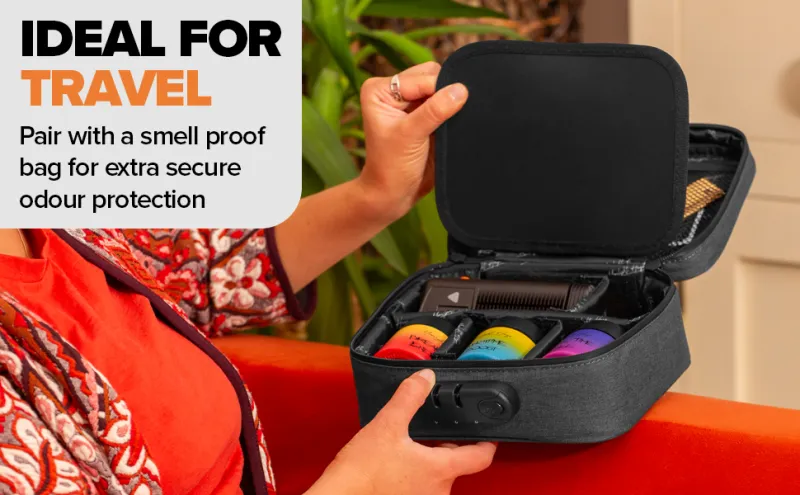
- On the go: Smell-proof, airtight travel cases designed specifically for cannabis — there are tons of good options now that don't look sketchy.
The Bottom Line
You spent real money on that flower. Whether it was a premium top-shelf pick from a licensed dispensary or a solid mid-tier option, the quality you paid for doesn't freeze in time the moment you walk out the door. It starts declining. How fast depends almost entirely on how you store it.
The good news is that the upgrade from zip-lock to a proper glass jar with a humidity pack costs less than a fast food combo meal and makes a noticeable difference — in flavor, in potency, and in the overall experience. Your weed deserves better than a crumpled baggie at the bottom of your backpack. Treat it accordingly.