Does Weed Actually Work Better Together? The Science Behind the Entourage Effect
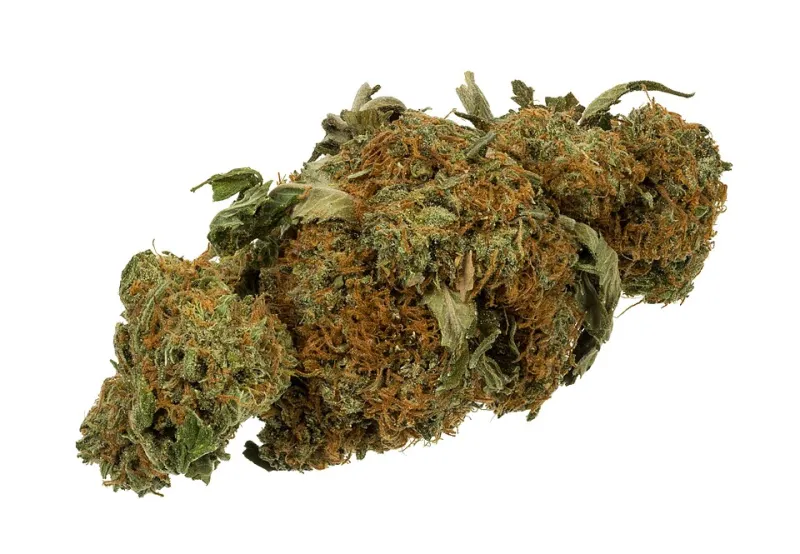
Photo: Evan-Amos, Public domain, via Wikimedia Commons
Walk into any dispensary in the country and you'll hear it within about five minutes. The budtender leans across the counter, gestures toward the full-spectrum tinctures, and says something like, "You want the whole plant — it's the entourage effect, everything works better together." It sounds compelling. It feels true to a lot of people who've tried both isolates and full-spectrum products. But when you actually sit down with the research, the picture gets complicated fast.
So let's do exactly that.
Where the Idea Even Comes From
The term "entourage effect" was coined back in 1998 by Israeli researchers Raphael Mechoulam and Shimon Ben-Shabat. Their original work wasn't even about cannabis in the way most people understand it — they were studying endocannabinoids, the compounds your own body produces, and observing how inactive lipid molecules seemed to enhance the activity of active ones. Mechoulam later extended the concept to the cannabis plant itself, suggesting that its hundreds of compounds — cannabinoids, terpenes, flavonoids — might interact in ways that amplify or modify each other's effects.
That's a reasonable hypothesis. The problem is that a hypothesis and a proven mechanism are very different things, and the cannabis industry ran with the idea long before the science had time to catch up.
What the Research Actually Shows (So Far)
Here's the honest truth: the clinical evidence for the entourage effect in humans is thin. Not nonexistent — but thin.
The strongest case comes from a handful of studies looking at CBD and THC together. Research published in the British Journal of Pharmacology suggested that certain terpenes like myrcene, linalool, and beta-caryophyllene might interact with cannabinoid receptors or influence the blood-brain barrier in ways that could theoretically modify a high or therapeutic effect. The key word there is theoretically. Most of these studies were conducted in vitro — meaning in a petri dish or on isolated cells — not in living, breathing humans navigating real life.
A 2020 review in the journal Cannabis and Cannabinoid Research looked at the available evidence for terpene-cannabinoid synergy specifically and found the data "insufficient" to draw firm conclusions. The authors didn't say the entourage effect was fake. They said we simply don't have the robust human clinical trials needed to confirm it works the way the marketing suggests.
There's also a meaningful distinction between anecdotal experience and biochemical mechanism. Plenty of people swear full-spectrum products hit differently than isolates. That's real data in its own right — lived experience matters. But placebo effect is powerful, expectation shapes perception, and without controlled conditions, it's genuinely hard to know what's driving the difference.
The Terpene Problem
One of the biggest issues muddying this conversation is that most commercially available cannabis products don't actually contain terpenes at meaningful therapeutic concentrations. When flower is processed into oils, concentrates, or edibles, terpenes — which are volatile aromatic compounds — are often lost in the process. Brands then add terpenes back in, sometimes from cannabis, sometimes from other botanical sources like lavender or hops.
The concentrations used in these reformulated products are frequently far below what researchers have tested in lab settings. So even if terpene-cannabinoid synergy is real and significant, the products marketed around that concept may not be delivering enough of the relevant compounds to trigger it. It's a bit like arguing red wine is healthy because of resveratrol, then selling a product with trace amounts of resveratrol and calling it medicine.
What Full-Spectrum Does Have Going for It
None of this means full-spectrum products are a scam. There's a legitimate argument that consuming a broader range of compounds — even if we don't fully understand how they interact — is a reasonable choice when you're working with a plant that humans have used for thousands of years and that contains dozens of potentially bioactive molecules.
The FDA-approved drug Epidiolex, which uses purified CBD to treat certain forms of epilepsy, has actually fueled debate on both sides. Some researchers point to it as proof that isolates can be highly effective. Others note that several clinical trials comparing purified CBD to whole-plant extracts for seizure control found whole-plant preparations performed better in some patients — though the evidence remains contested.
For anxiety, pain, sleep, and the kinds of everyday wellness use cases most AllWeed readers are thinking about, the honest answer is: it probably varies by person, by condition, and by the specific compounds present in the product you're holding.
How to Think About This When You're Shopping
Given the current state of the science, here's a practical framework for navigating the full-spectrum vs. isolate decision without getting played by marketing:
Don't let the label do the thinking for you. "Full-spectrum" is not a regulated term in most states. Ask for a Certificate of Analysis (COA) and look at what's actually in the product — not just THC and CBD percentages, but minor cannabinoids like CBG, CBN, and CBC, and whether terpene content is listed.
Start with your goal. If you're using CBD for a specific, targeted purpose and you want to avoid any THC whatsoever, a high-quality isolate or broad-spectrum product might actually serve you better. If you're open to a more holistic experience and want to experiment with what the whole plant has to offer, full-spectrum is worth trying.
Track your experience systematically. Keep a simple journal — strain, product type, dose, effect. Over time, patterns emerge that are specific to your endocannabinoid system, which is as individual as your fingerprint.
Be skeptical of certainty. Any brand telling you definitively that their full-spectrum product is scientifically proven to work better because of the entourage effect is overselling what the research supports. The honest brands acknowledge the nuance.
The Bottom Line
The entourage effect is a genuinely interesting scientific idea that deserves continued rigorous research. It is not, at this point, a proven phenomenon with a well-mapped mechanism in humans. The cannabis industry — for all the progress it's made — still has a tendency to dress up promising hypotheses in the language of established fact, and consumers pay the price when they make decisions based on hype rather than evidence.
That doesn't mean you should dismiss the concept entirely. It means you should hold it lightly, stay curious, and keep demanding better data. The science is young, the plant is complex, and the most honest thing anyone can tell you right now is that we're still figuring it out.
Which, honestly? Is kind of exciting.