Labels Don't Lie: How to Use Cannabinoid Ratios to Shop Smarter
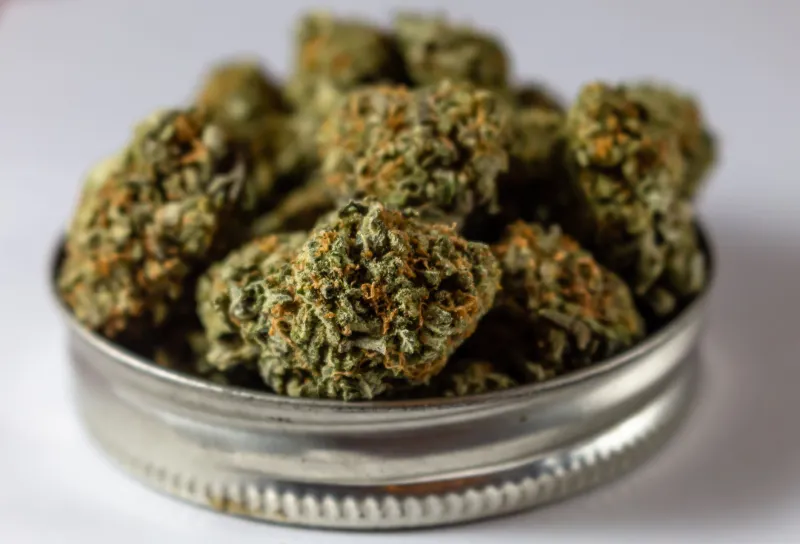
Walk into any dispensary in America and you'll hear the same two letters thrown around like they're the whole story: THC and CBD. And sure, those two cannabinoids matter — a lot. But if that's all you're reading on a label, you're basically judging a restaurant by its name alone.
The cannabis plant produces over 100 known cannabinoids. Most of them show up in tiny amounts, but those trace levels can dramatically shift the way a product hits you, how long the effect lasts, and what it actually does for your body. If you've ever grabbed two products with identical THC percentages and had completely different experiences, this is probably why.
Let's break down what the other players on the label are actually doing.
CBN: The One That Actually Puts You to Sleep
Cannabinol — CBN — is what happens when THC ages. As cannabis oxidizes over time, THC converts into CBN. That's why older weed tends to feel more sedating. It's not just your imagination; it's chemistry.
CBN itself has pretty mild psychoactive properties, but its real value is in what it does to your body. Early research and a mountain of anecdotal evidence suggest it's a solid sleep aid, especially when it's paired with THC in the right ratio. Products marketed specifically for sleep often lean into higher CBN content — and for good reason. If you're shopping for nighttime relief and you're not checking the CBN percentage, you might be leaving a lot on the table.
Look for products in the 1:1 to 2:1 THC:CBN range if sleep is your goal. Some brands now offer CBN isolates and tinctures designed specifically for this purpose.
CBG: The Quiet Overachiever
Cannabingerol — CBG — is sometimes called the "mother cannabinoid" because it's the precursor to both THC and CBD during the plant's growth cycle. By the time most cannabis is harvested, CBG levels have dropped pretty low. That's what makes CBG-dominant strains and products genuinely rare and worth paying attention to.
What does it do? Users consistently report that CBG-rich products deliver a clear-headed, focused kind of lift — without the paranoia edge that high-THC products can sometimes bring. It's being studied for potential antibacterial properties and its possible role in supporting gut health, though clinical research is still catching up.
If you're someone who wants to stay functional — working, creating, having a real conversation — but still wants the cannabis experience, start looking for products with meaningful CBG content. Even 2-5% CBG in a product can noticeably shift the effect profile toward something more clean and energizing.
THCV: The Cannabinoid That Earns Its Nickname
Tetrahydrocannabivarin — THCV — has picked up the nickname "diet weed" in some circles, and while that's a bit reductive, it's not entirely wrong. At lower doses, THCV actually appears to suppress appetite rather than trigger it, which makes it almost the opposite of your standard THC experience.
At higher doses, THCV becomes mildly psychoactive, but the high is typically described as fast-acting and short-lived — a sharper, more electric kind of effect compared to the slow, heavy roll of regular THC. It's also being explored for its potential role in blood sugar regulation, which has caught the attention of researchers studying metabolic health.
For consumers, THCV is particularly interesting if you want daytime functionality, appetite control, or just a different texture to your high. African sativa strains — Durban Poison being the most famous example — tend to run higher in THCV naturally. Some specialty brands now feature it prominently in their formulations.
CBC: The One Working Quietly Behind the Scenes
Cannabichromene — CBC — doesn't get much spotlight, but it's doing real work. It's non-intoxicating on its own, but it appears to amplify the effects of other cannabinoids, particularly in topicals and full-spectrum products. Think of it as a supporting actor who makes the lead look better.
Research into CBC is still early, but there's growing interest in its potential anti-inflammatory and mood-lifting properties. It seems to interact with receptors in the body that influence pain perception and emotional regulation — not through the same pathways as THC, but through its own mechanism.
If you're using cannabis for chronic pain or mood support, full-spectrum products that include CBC alongside THC and CBD may outperform isolates or broad-spectrum options. This is part of what researchers call the entourage effect — the idea that cannabinoids work better together than in isolation.
How to Actually Read a Label With All This in Mind
So you're standing in a dispensary, or scrolling through an online menu, and you've got a product in front of you. Here's a practical framework:
Define your outcome first. Are you trying to sleep? Focus? Manage pain? Kill anxiety without getting couch-locked? Your goal determines which ratios matter most.
Look for full-spectrum or whole-plant products. These retain the widest cannabinoid profile. Broad-spectrum removes THC but keeps other cannabinoids. Isolates are just one compound. For nuanced outcomes, full-spectrum usually wins.
Check the COA (Certificate of Analysis). Any reputable brand will have third-party lab testing available. The COA breaks down not just THC and CBD percentages, but the full minor cannabinoid profile. If a brand doesn't have one, that's your cue to walk.
Start with ratios, not just totals. A product with 15% THC and 3% CBG tells a different story than one with 15% THC and 3% CBN. Same total cannabinoid content, completely different experience.
Keep notes. Seriously — even a few lines in your phone about what you took, when, and how you felt builds a personal database that's worth more than any budtender recommendation.
The Bottom Line
The cannabis market has matured enough that shopping purely by THC percentage is the equivalent of buying wine based solely on alcohol content. The nuance is in the full picture — and the full picture includes all those other letters on the label.
Minor cannabinoids aren't minor in effect. They're minor in quantity. That's a crucial distinction. Once you start reading labels through that lens, you'll start finding products that actually do what you need them to do — consistently, predictably, and with a lot less trial and error.
That's not just being a smarter shopper. That's being a cannabis connoisseur.