Not All Green Is Good: How to Tell If What You're Buying Is the Real Deal
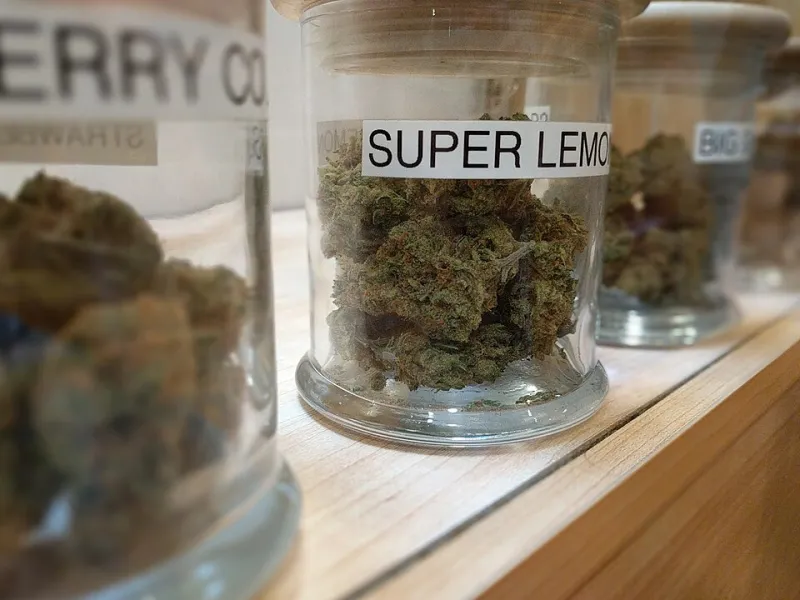
Photo: My 420 Tours, CC BY-SA 4.0, via Wikimedia Commons
Let's be honest — most of us walk into a dispensary with a comfortable level of trust. It's licensed, it's legal, it's got a guy in a polo shirt behind the counter explaining terpene profiles. What could go wrong?
Plenty, actually.
Counterfeit cannabis products — everything from fake branded vape carts to black market flower dressed up in legitimate-looking packaging — have been quietly infiltrating legal retail channels for years. And while regulators are working to close the gaps, the burden of verification still falls heavily on the consumer. So let's talk about what to actually look for before you swipe your card.
The Counterfeit Problem Is Bigger Than You Think
It started getting serious around 2019, when the vaping lung illness outbreak (EVALI) killed dozens of people and hospitalized thousands. The culprit in most cases? Vitamin E acetate found in counterfeit THC vape cartridges — products that looked almost identical to legitimate ones but were manufactured completely outside the legal supply chain.
That crisis exposed a structural vulnerability: the cannabis industry's branding is largely unprotected and easy to replicate. Anyone with a decent printer and a few bucks in supplies can produce packaging that looks convincingly real. And when those products find their way onto dispensary shelves — whether through a rogue employee, a compromised wholesale distributor, or a licensing loophole — customers have almost no way of knowing.
"We've seen products come through our intake process that looked totally legitimate on the outside," one dispensary floor manager in Colorado told us. "It wasn't until we cross-referenced the batch number with the lab that we caught it. Not every shop does that."
That's the uncomfortable truth. Not every dispensary has airtight verification protocols.
Red Flag #1: The Packaging Doesn't Match the COA
Every legal cannabis product sold in the US should come with a Certificate of Analysis — a lab report that documents potency, terpene content, and the absence of pesticides, heavy metals, and microbial contaminants. The COA should be traceable to the specific batch number printed on the packaging.
Here's the test: ask the budtender to pull up the COA for the product you're buying. Then physically compare the batch or lot number on the package to the one on the lab report. If they don't match — or if no COA exists — that's a serious red flag.
Counterfeit products frequently reuse batch numbers from legitimate products, or they carry batch numbers that simply don't exist in the lab's database. Some brands post their COAs on their website by batch number, so you can verify independently right from your phone.
Red Flag #2: The Vape Cart Feels Too Good to Be True
Vape cartridges remain the most commonly counterfeited cannabis product category in the US. Part of the reason is the gray market for branded hardware — empty carts bearing the logos of popular brands like Stiiizy, Brass Knuckles, or Dank Vapes can be purchased in bulk online and filled with anything.
Some things to check when evaluating a vape cart:
- Weight and viscosity: Legitimate distillate or live resin oil is thick and moves slowly when you tilt the cart. Thin, watery oil that moves quickly is a warning sign.
- QR codes and holograms: Many legitimate brands include scannable QR codes or holographic seals that verify authenticity. Scan them. If the code doesn't resolve to a real product page, walk away.
- Spelling and design quality: Counterfeit packaging often has subtle errors — wrong fonts, slightly off logos, awkward spacing. It sounds minor, but established cannabis brands have tight brand standards. Anything that looks slightly "off" deserves scrutiny.
- Price: If a vape cart is priced significantly below market rate, that's not a deal — that's a warning.
Red Flag #3: The Flower Smells Like... Nothing
High-quality cannabis has a distinctive aromatic profile driven by terpenes — those volatile organic compounds responsible for everything from the citrus punch of a Lemon Haze to the earthy funk of an OG Kush. Legitimate, properly cultivated and cured flower should smell like something.
Flower that has been improperly stored, heavily sprayed with pesticides, or artificially enhanced with synthetic terpenes often has a flat, chemical, or suspiciously uniform scent. It might smell generically "weed-like" without any real complexity.
Ask to smell before you buy. Any reputable dispensary should allow you to examine the flower — either through a smell-proof jar display or by having a budtender open a sample. If they won't let you evaluate the product at all, that's worth noting.
"The nose knows more than people give it credit for," said one lab technician we spoke with who works with a third-party testing facility in California. "Contaminated product often has a tell — something slightly off in the smell. It's not always obvious, but it's there."
Red Flag #4: The Dispensary Can't Trace the Product's Chain of Custody
In states with mature regulatory frameworks — California, Colorado, Oregon, Illinois — cannabis products are tracked from seed to sale through state-mandated systems like Metrc (Marijuana Enforcement Tracking Reporting Compliance). Every batch of legally grown and processed cannabis should have a paper trail.
You have the right to ask a dispensary where a product came from. A confident, knowledgeable budtender should be able to tell you the cultivator, the processor (if applicable), and point you toward the state's traceability system if you want to verify. If the staff seems evasive or genuinely doesn't know, that's a gap in accountability you should take seriously.
This is especially important for edibles and concentrates, where the source material is less visually obvious.
What You Can Actually Do Right Now
You don't need to become a full-time forensic cannabis investigator to protect yourself. A few simple habits go a long way:
- Always request the COA and verify the batch number matches the packaging.
- Scan QR codes on vape products before purchasing.
- Buy from dispensaries that have strong reputations — check reviews, ask in community forums like Reddit's r/trees or local cannabis Facebook groups.
- Trust your senses — smell, look, feel the product before you commit.
- Report anything suspicious to your state's cannabis regulatory authority. In most states, there's a complaint process specifically for this.
The Bigger Picture
Counterfeit cannabis products aren't just a consumer inconvenience — they're a public health issue and a direct threat to the legitimacy of the legal market. Every fake product that slips through undermines the argument that regulated cannabis is safer than the black market.
Advocates and industry insiders largely agree that tighter enforcement, better funding for state tracking systems, and more consumer education are the long-term solutions. But until those systems are airtight, the savvy consumer is their own first line of defense.
Know what you're buying. Ask questions. Verify what you can. The legal market exists to protect you — but only if you use the tools it provides.