Weed and Wavelengths: The Real Science Behind Why Music Sounds Unreal When You're High
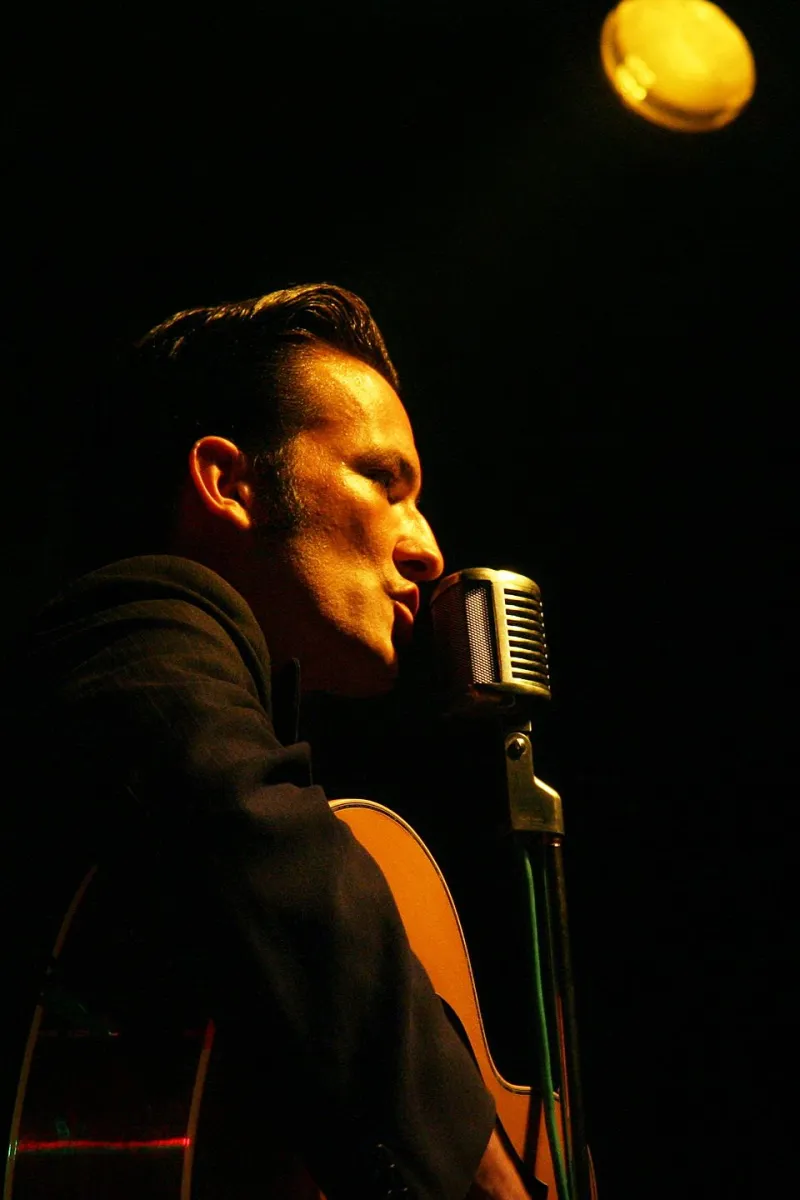
Photo: user:AngMoKio, CC BY-SA 2.5, via Wikimedia Commons
You know the feeling. You spark up, settle into your couch, hit play on something you've heard a thousand times — and suddenly it's like you're hearing it for the first time. The bass is deeper. The lyrics mean something different. That guitar solo lands somewhere in your chest instead of just your ears. It's not your imagination. The connection between cannabis and music is neurologically real, and it's one of the most fascinating intersections in the world of weed.
Let's break it down.
What Cannabis Is Actually Doing to Your Brain During a Song
When THC enters your system, it binds to CB1 receptors scattered throughout your brain — including regions that govern time perception, memory, and emotional processing. That's the trifecta that makes music feel so intense.
Here's the key thing: cannabis slows your internal clock. Research published in Psychopharmacology found that cannabis users significantly overestimate the passage of time. In musical terms, this means a four-second drum fill might feel like it stretches across eight seconds. You're not imagining extra notes — your brain is giving each one more real estate to exist in.
The hippocampus, your memory hub, also gets a THC-fueled shake-up. It becomes less efficient at filtering information, which sounds like a bad thing but is actually part of why music feels so layered when you're high. Normally, your brain prunes out sonic details it considers irrelevant. Cannabis loosens that filter, letting in background harmonics, production choices, and subtle instrumentation you'd otherwise tune out.
Then there's the nucleus accumbens — your brain's reward center. THC supercharges dopamine release in this region, which is exactly why an already-emotional song can bring you to the edge of tears or make you feel inexplicably euphoric. You're not being dramatic. Your reward circuitry is literally in overdrive.
The Genre-Strain Connection Is More Real Than You Think
Not all highs are created equal, and neither are all music experiences. The strain you choose — and how you consume it — genuinely shapes how sound lands.
Sativas and upbeat genres tend to be a natural pairing. Sativa-dominant strains like Green Crack or Durban Poison tend to produce cerebral, energetic highs that sync well with fast-tempo music: hip-hop, electronic dance, indie rock, funk. The heightened mental activity amplifies lyrical complexity — you're more likely to catch wordplay, follow a rapper's internal rhyme schemes, or appreciate the compositional architecture of a jazz-fusion track.
Indicas and atmospheric sound are a different conversation entirely. Heavy indicas like Granddaddy Purple or Northern Lights slow the body down and drop you into a more introspective headspace. That's where ambient music, lo-fi beats, classic soul, and slower R&B live. The body high adds a physical dimension to listening — you don't just hear the music, you feel it settle into your muscles.
Hybrids and the in-between vibes are honestly the most versatile pairing. A balanced hybrid like Blue Dream opens the door to almost anything. Listeners tend to report that hybrids make them more emotionally responsive across genres — a country ballad hits as hard as a rap anthem, depending on where their head is.
Consumption method matters too. Edibles, with their slower onset and longer duration, tend to create a more immersive listening experience — great for full-album listens, live concert recordings, or anything with a long narrative arc. Vaping or flower hits faster and tends to be more dynamic, pairing well with shuffle mode or genre-hopping playlists.
Building Your Session Playlist by Vibe
Okay, so you've got your product picked out. Now what do you actually queue up? Here's a breakdown organized by the kind of experience you're chasing.
For Deep Relaxation (Indica or CBD-forward products)
Think: Brian Eno's ambient catalog, Sade, Frank Ocean's Blonde, D'Angelo's Voodoo, anything by Khruangbin. These artists use space and texture the way a good indica uses your body — slowly, intentionally, without rush.
For Creative Energy (Sativa or uplifting hybrids)
Think: Kendrick Lamar's To Pimp a Butterfly, Tame Impala, LCD Soundsystem, Thundercat, early Outkast. These records reward active listening and reward the kind of pattern-recognition that a cerebral sativa high tends to unlock.
For Social Sessions (Hybrids, low-dose edibles, or infused beverages)
Think: Motown classics, 90s R&B, feel-good hip-hop like J. Cole or Chance the Rapper, or a curated Spotify playlist of crowd-pleasing bangers. Social highs benefit from music that everyone in the room already has a relationship with — nostalgia is a powerful shared experience.
For the Comedown (Any strain, winding down)
Think: Bon Iver, Nick Drake, Sufjan Stevens, or even classical piano. As THC metabolizes and the high softens, music tends to feel more emotionally raw. Gentle, introspective sounds match that energy and help ease the transition back to baseline.
What the Community Is Actually Listening To
We asked AllWeed readers to share their go-to session playlists, and the answers were all over the map in the best way.
A reader from Portland said she swears by putting on Radiohead's Kid A after a dab of a heavy indica concentrate. "It's like the album was designed for that exact headspace," she told us. "Every sound makes total sense."
A guy from Atlanta shared that he always starts a sesh with old Goodie Mob before transitioning into newer trap instrumentals. "The lyrics from the 90s stuff hit different when I'm high — suddenly I'm really hearing what they were saying about the South."
A couple from Chicago said they've started using low-dose gummies and putting on vinyl records specifically to slow down and pay attention to music together. "It's become our Friday night ritual. We pick one album, no phones, no talking until it's over. It's weirdly intimate."
The Takeaway
Cannabis doesn't just make music louder or more fun — it literally changes the biological process through which you experience sound. Time stretches. Filters drop. Emotional responses amplify. When you match the right strain or product to the right sonic environment, you're not just getting high and putting on some tunes. You're engineering an experience.
So next time you're building a playlist for a session, think about it the way you'd think about pairing food and wine. What's the mood? What's the strain? What do you want to feel by the end? The answers will tell you exactly what to play.
And if you're not sure where to start — honestly, just trust the shuffle. Cannabis has a funny way of making every song feel like it was made for exactly that moment.